
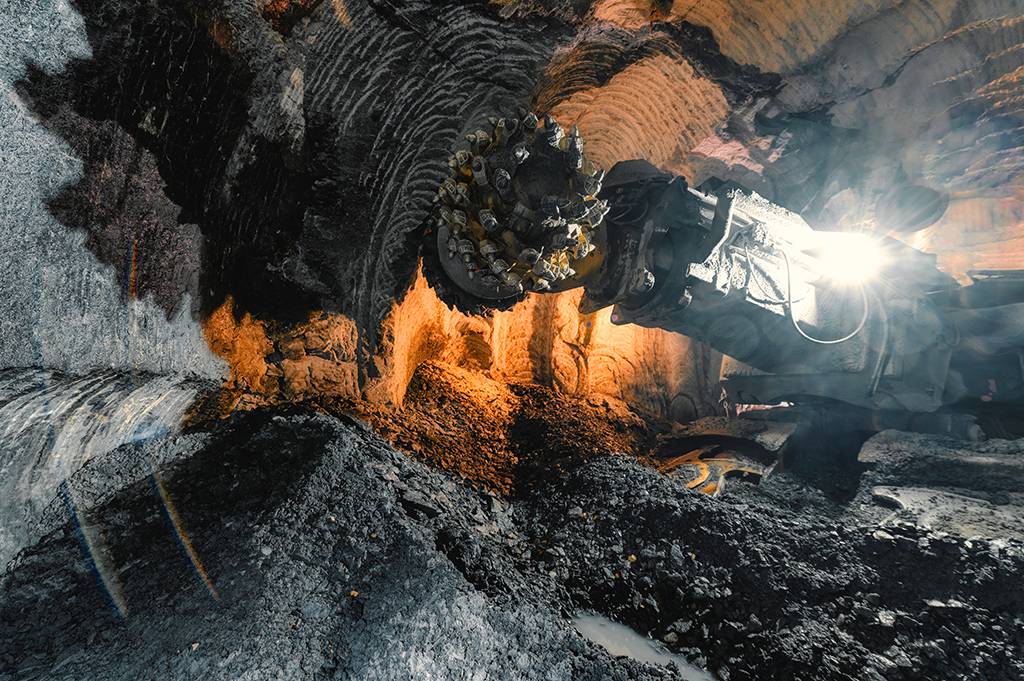

The mining industry is an essential part of the Australian economy. It's one of the largest and most important sectors in the country, with significant contributions to employment, infrastructure, exports, tax royalities, and economic growth.
While images of red earth, coal, iron ore or open-cut mines might immediately come to mind, you might be surprised to learn that a lot of Australia's mining operations actually happen underground.
However, working in an underground mine is not for the faint-hearted. It's a challenging and demanding job that requires physical stamina, mental focus, and a keen sense of safety awareness. Yet, for those who embrace the challenge, it offers a unique and rewarding career path.
Underground mining is an essential component of Australia's resource industry and refers to the extraction of minerals and resources from beneath the Earth's surface.
This intricate process involves drilling, blasting, and removing rock and ore from underground tunnels and shafts, which can be hundreds of metres below the surface. It demands specialised skills and knowledge that enables the retrieval of valuable deposits that are typically inaccessible through surface mining methods.

Despite the challenges, many people are drawn to underground mining for the unique opportunities it offers. For some, it's the chance to work with cutting-edge technology and machinery – pushing the boundaries of what's possible in mining exploration and extraction. For others, it's the camaraderie and teamwork fostered underground, the exciting opportunities for career advancement, and the attractive compensation packages and benefits.
Board and pillar mining: This method involves creating a series of tunnels underground, leaving pillars of untouched material to provide support to the mine structure.
Longwall mining: In this method, a long wall of coal, ore, or mineral deposit is mined in a single slice. The section of rock that is being mined, known as the longwall panel, is typically 3–4 km, but can be longer.
In addition to the longwall method above is a method called Top Coal Caving, by which a pan and chain is located behind the roof supports to remove any coal left behind by the longwall cutting process. It is a more efficient way to ensure that the coal is not left behind in the GOAF (the part of the mine from which the coal has been worked away).

While working in an underground mine may seem daunting at first, advancements in technology have significantly improved safety standards and working conditions in modern underground mines.
Safety is the top priority in any mining operation, with strict protocols and regulations in place to protect workers. Cutting-edge equipment, like gas detectors and ventilation systems continuously monitor air quality and potential hazards, ensuring a safe working environment.
Comfort is also a priority in modern underground mines. Gone are the days of dimly lit tunnels and carrying in canary's to see if they pass out. Advances in lighting technology have made it possible to illuminate mines, creating well-lit working environments where miners can see and work more effectively.
Ventilation systems play a crucial role in maintaining a comfortable temperature and air quality within the mine. These systems circulate fresh air throughout the tunnels, removing any potentially harmful gases or dust particles, enhancing the overall working conditions underground.

If you're considering a career in Queensland's underground mining industry, you first need to complete the Standard 11 Surface Mining Induction, which will then enable you to enrol in the Standard 11 Underground Mining Induction:
If you're already working in mining and looking to develop new skills or take a step up, take some time to view our mining courses.
For more information about these courses please call us on 1300 CIVIL S or email us at info@civilsafety.edu.au